
How a mother helps her daughter face Pompe disease treatment
Infusions have become more challenging with age
Written by |
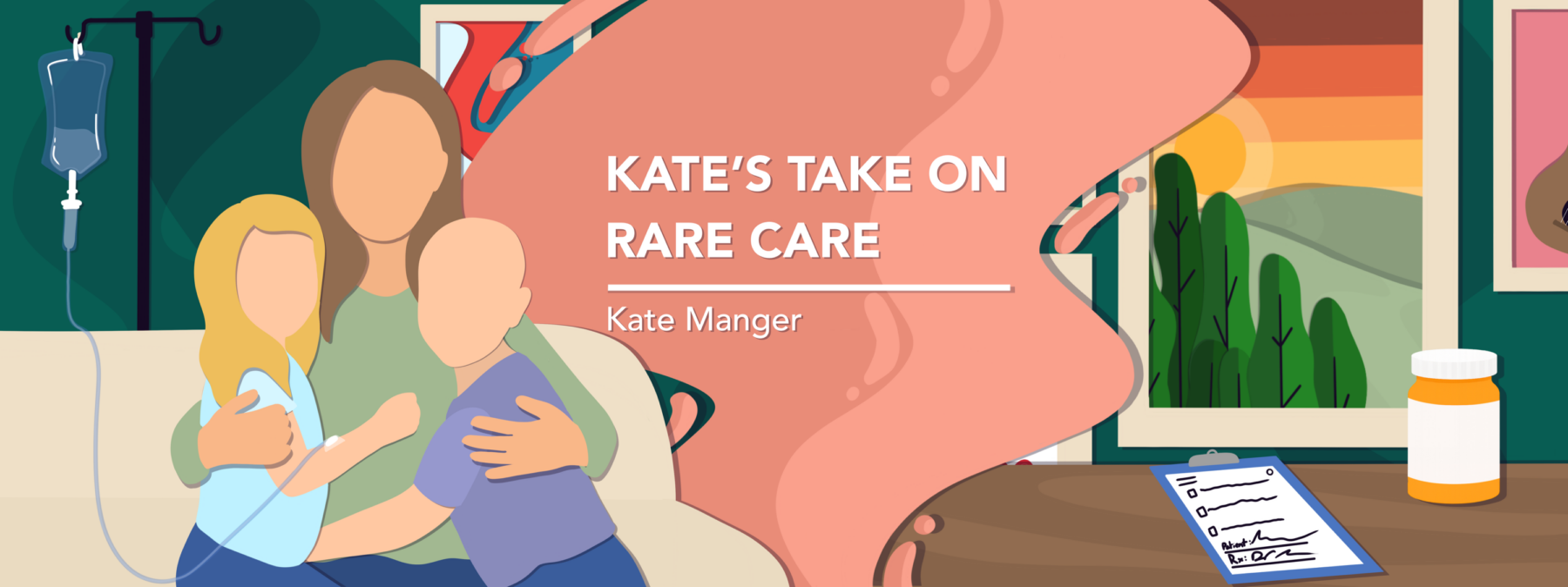
People often ask how my daughter Caroline handles her infusions. The answer changes depending on the season of life we’re in. Sometimes even the day.
When Caroline was a baby, accessing her port was so hard. She didn’t understand what was happening — only that strangers held her down as a needle was pushed into her chest. Most days, it was the nurse and me gently but firmly holding her as she screamed. I hated every second.
Even now, I remember the knot in my stomach, the guilt, and the constant questioning — am I really doing the right thing? Logically, I knew the medicine helped her Pompe disease, but motherhood isn’t logical. It’s deeply unsettling to hold your child still while they look at you, pleading for it to stop.
Looking back, it was probably harder on me than on Caroline. She bounced back quickly. I spent the day replaying it all, wishing I could make it easier for her.

A box full of treasures
When Caroline was a toddler, we found our rhythm. She became more cooperative, learning what to expect. Her wonderful infusion nurse came up with one of the best ideas: a treasure box.
She painted and decorated a wooden chest. After each successful access, the Treasure Box Fairy (who was really me) would leave a small prize — stickers, toys, or candy. Just enough to add a bit of magic and make infusion day feel a little less medical.
For a while, it worked so well. Caroline was proud of being brave. She would hold still and look forward to seeing what surprise the fairy had picked out for her. I thought that maybe we’d finally figured it out. But then, she got older.
Now, as Caroline gets closer to 8 years old, the challenge has shifted. It is not so much about the physical part anymore. It is mental. She knows exactly what is coming. We put numbing cream on her chest and let it sit, but she still feels it. She knows every step by heart. She waits for the pressure, braces herself for that deep sensation in her chest.
Maybe the hardest part now is that she is old enough to overthink things. She hesitates and tries to get herself ready, but sometimes ends up talking herself out of being ready at all.
Suddenly, the little girl who used to sit so proudly waiting for the Treasure Box Fairy now needs 15 more minutes. Then five more. Then she remembers she forgot to squeeze her “lovie.” Then she asks for one more hug.
‘I’m ready enough’
Her home health nurse does a beautiful job of giving Caroline some control over the process. “Tell me when you’re ready,” she’ll say. Because in a world where so much of this is out of Caroline’s control, having a voice matters. But we also know that if Caroline had complete control over the timing, we’d still be waiting three days later. There are several hours of infusion ahead of us. Eventually, ready or not, we have to begin.
It is such a delicate balance. How much independence do you give your child? When does encouragement turn into pressure? How do you know when patience is helpful, and when it is just putting things off? I don’t always know the answers. And unlike when she was little, there is not much left that works as a bribe. Candy doesn’t do it anymore. Doughnuts are not enough.
The truth is, there isn’t much anyone can do to change how Caroline feels about this. Only she can get herself ready for the reality that a big needle is about to go into her chest. As her mom, that is both heartbreaking and humbling. I can apply the numbing cream. I can hold her hand, rub her back, and tell her she is brave. I can remind her of all the other hard things she has done and how she has always come through.
But I can’t do this part for her. Maybe that is one of the hardest lessons of parenting a child with a chronic illness. We spend years trying to protect our kids from pain, only to realize that, in the end, they have to learn they can get through it. Not because they’re fearless. Not because they want to. Courage isn’t about having no fear. It’s about looking at something you wish you didn’t have to do, taking a deep breath, and saying, “OK. I’m ready.”
Or at least, “I’m ready enough.” And for now, that’s more than enough for me.
Note: Pompe Disease News is strictly a news and information website about the disease. It does not provide medical advice, diagnosis, or treatment. This content is not intended to be a substitute for professional medical advice, diagnosis, or treatment. Always seek the advice of your physician or other qualified health provider with any questions you may have regarding a medical condition. Never disregard professional medical advice or delay in seeking it because of something you have read on this website. The opinions expressed in this column are not those of Pompe Disease News or its parent company, Bionews, and are intended to spark discussion about issues pertaining to Pompe disease.


Leave a comment
Fill in the required fields to post. Your email address will not be published.