
My daughter’s perspective on life with Pompe disease surprised me
What my 8-year-old would tell a kid who's just been diagnosed with Pompe
Written by |
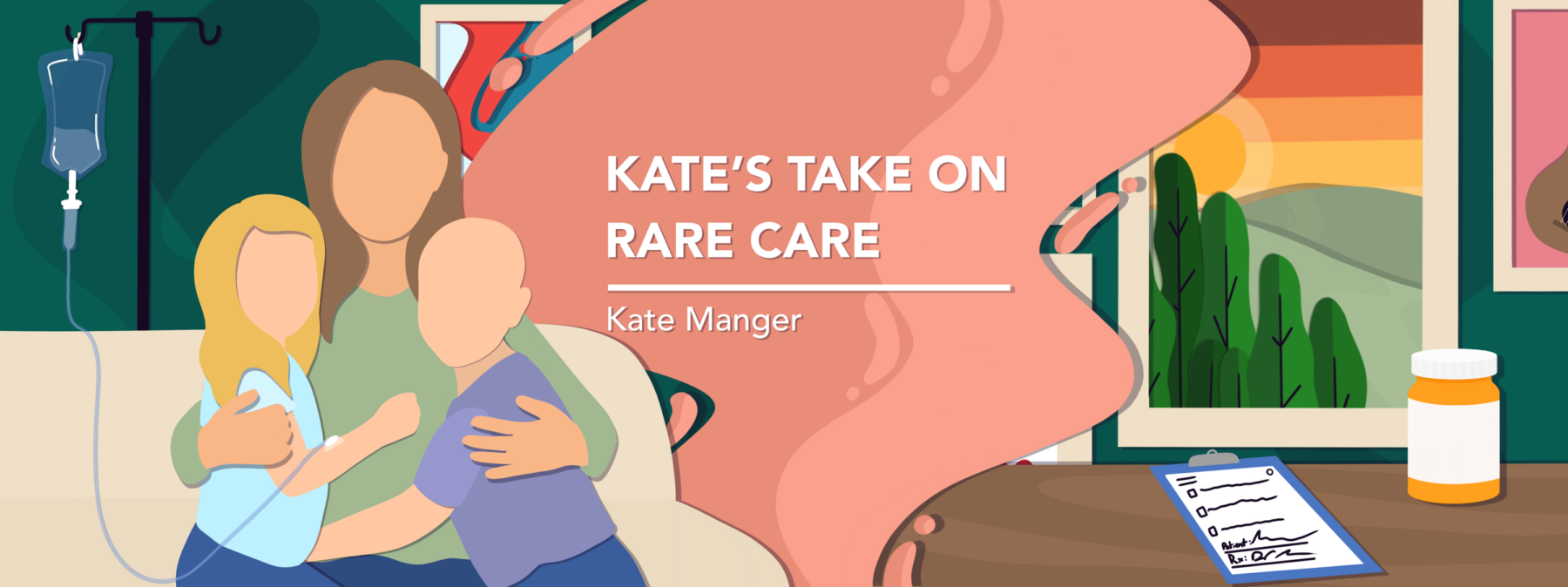
I recently asked my 8-year-old daughter Caroline a question I thought I already knew the answer to. If a kid had just been diagnosed with Pompe disease, what would she want them to know?
I braced myself. I expected her to rattle off a list of complaints — the needles, the tests, the long days hooked up to her infusion tube. All of that is real, and she’s earned every right to feel frustrated about it.
But instead, she paused and told me the most important thing is knowing everything that’s going on. She really meant everything — what each appointment is for, what each medication does, what happens during an infusion, and why. She said she likes that her dad and I always tell her what’s happening, what has happened, and what might happen next. Even the hard parts. Especially the hard parts.
I’ll admit, this wasn’t always how we did things. In the beginning, my instinct, like that of most parents, was to protect her. Every decision about her care felt huge, and the thought of talking with her about all of it, especially the scary parts, felt risky. But at some point, we realized Caroline shouldn’t just be along for the ride in her own medical story. When she asked a question, we answered it honestly, even if the answer was “I don’t know” or “that part is hard.”

The power of information
Caroline also told me she likes hearing about how hard things were for us at the beginning. She likes the stories about the stressful decisions, the sleepless nights, the times we doubted ourselves. I used to think those were things I should keep from her. But she hears them differently than I expected. For her, they’re the missing chapters. They help her understand how she got here, to being 8 years old and, as she says, a pretty normal kid.
Then she said something I keep coming back to. She knows how much worse things could be if she didn’t have the medicine she has now. She understands she’s lucky in a way that most people wouldn’t see just by looking at her. That awareness doesn’t scare her. If anything, it seems to give her strength.
And then she told me what she’d say to another kid just diagnosed: It’s really not all that bad. Being different is actually a lot cooler than you might think.
I’ve thought about that sentence a lot since then. It would be easy to chalk it up to a child’s optimism, or maybe just because this is the only life she’s ever known. Maybe that’s part of it. But I think there’s more to it. When a child is told the truth, there’s no need to imagine something worse than what’s real. Fear grows in the spaces where things aren’t talked about, in the quiet moments and closed doors. When there aren’t those gaps, there’s less room for fear to take hold.
What I’m learning from all of this is that control doesn’t have to mean controlling the disease itself. Pompe is unpredictable, and no amount of planning can change that. We worry all the time about Caroline, about the choices we’ve made and the ones still to come. But Caroline has found her own kind of control. She has information. She has a voice in what happens. She knows that when she asks a question, she’ll get a real answer.
That might be the most important thing we’ve given her, and we didn’t even realize it at the time. If you’re a parent just starting out on this road, tell your child the truth, in words they can understand. They might surprise you with what they can carry. I’m still surprised by what Caroline can carry. I’m learning to trust her with it.
Note: Pompe Disease News is strictly a news and information website about the disease. It does not provide medical advice, diagnosis, or treatment. This content is not intended to be a substitute for professional medical advice, diagnosis, or treatment. Always seek the advice of your physician or other qualified health provider with any questions you may have regarding a medical condition. Never disregard professional medical advice or delay in seeking it because of something you have read on this website. The opinions expressed in this column are not those of Pompe Disease News or its parent company, Bionews, and are intended to spark discussion about issues pertaining to Pompe disease.

Leave a comment
Fill in the required fields to post. Your email address will not be published.